
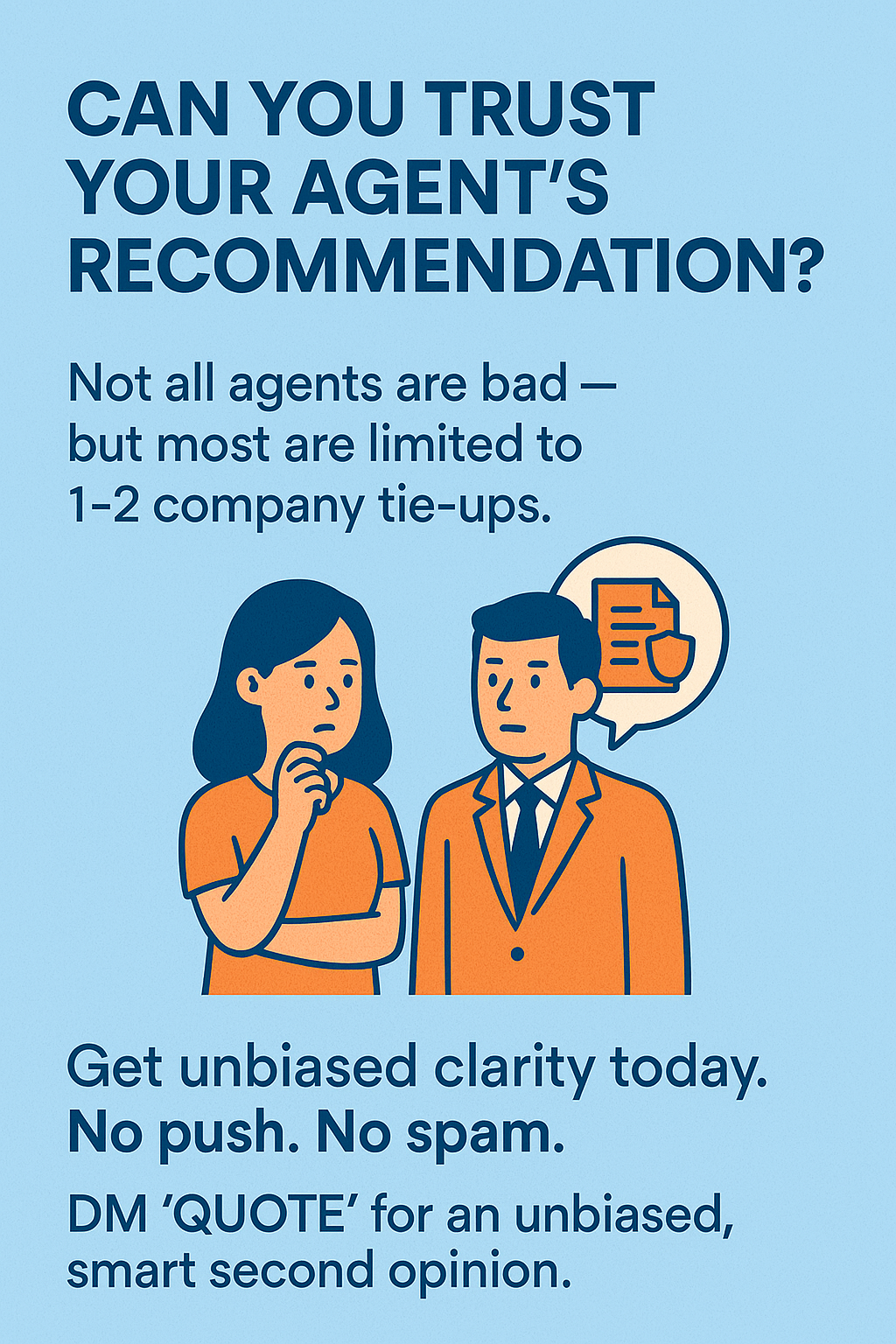
The Limitations of Traditional Insurance Agents
Choosing the right health insurance policy is a critical decision—one that affects both financial stability and access to quality healthcare. Most people rely on insurance agents to guide them through this process, assuming that their recommendations will be the most beneficial.
However, insurance agents don’t always provide a complete picture. They typically:
- Represent a limited set of insurers, which restricts the policies they can offer
- Prioritize commission-based incentives, leading to recommendations that may not be the best fit
- May not fully disclose policy exclusions, sub-limits, or hidden clauses
- Lack tools for objective comparisons across multiple insurance providers
This means that while an agent might suggest a policy that appears ideal, it may not align with your specific medical needs, financial situation, or future healthcare requirements.
The Risk of Relying Solely on Agents
1. Limited Exposure to Policies
Most insurance agents work with a handful of companies—often just a few insurers whose plans they actively promote. They are typically contracted to sell specific policies, meaning they won’t present options from insurers they don’t work with.
As a result:
- You might miss out on better policies available elsewhere
- The recommended policy might not have the most favorable features for your needs
- Competitive offerings from lesser-known insurers could go unnoticed
2. Potential Bias Towards Higher Commissions
Insurance agents earn commissions based on the policies they sell. While some genuinely aim to provide the best advice, many focus on policies that offer them the highest payouts.
For example:
- An agent might steer you toward a policy with higher premiums, even if a lower-cost alternative provides equal or better coverage
- Policies with lower claim rejection rates might not be recommended if they don’t offer strong commission incentives
- Hidden clauses may not be explained upfront, leading to problems at the time of claim settlement
A Family Misguided by an Agent’s Advice
A family of four in Mumbai wanted comprehensive health insurance. Their agent recommended a ₹35,000 per year plan with ₹10 lakh coverage. However, upon closer inspection:
- The policy had a ₹5,000/day room rent limit, restricting hospital room choices
- No restore benefit, meaning once coverage was used, it wouldn’t replenish
- Disease-specific sub-limits, capping expenses for critical procedures
Using AI-driven comparison tools, the family found a better policy for ₹24,500 per year, which offered:
- ₹10 lakh coverage with no room rent restrictions
- Unlimited restore benefits
- Full hospitalization coverage with no disease-specific sub-limits
Their new policy saved them ₹10,500 annually while offering stronger benefits, proving that an agent’s suggestion wasn’t necessarily the best fit.
AI-Driven Platforms for Smarter, Unbiased Comparisons
1. AI Offers Complete Market Analysis
Unlike agents who work with limited insurers, AI-driven insurance comparison platforms scan policies across the entire market. They analyze:
- Premium costs vs. benefits
- Hidden clauses like room rent capping and waiting periods
- Claim settlement ratios across insurers
2. Objective & Transparent Recommendations
AI tools provide data-driven insights, ensuring unbiased policy comparisons. Instead of prioritizing policies based on commissions, AI:
- Highlights strong claim approval records
- Compares policies based on individual health requirements
- Flags sub-limits and exclusions before purchase
3. Instant Policy Customization
With AI tools, users can input:
- Family size
- Existing health conditions
- Budget preferences
- Required benefits (like OPD coverage, maternity benefits, or critical illness riders)
AI then matches the best-fitting policy, ensuring a customized approach rather than a one-size-fits-all recommendation.
4. Identifying Real-World Claim Experiences
AI platforms pull historical claim settlement data from insurers. This helps users evaluate:
- Which companies process claims efficiently
- Insurers with high rejection rates
- Average settlement times
5. Eliminating Hidden Clauses & Unexpected Costs
AI scans policy documents to uncover:
- Co-payment clauses that require a portion of expenses to be paid by the insured
- Disease-specific coverage caps
- Limitations on ICU, diagnostics, and advanced treatments
Users receive clear breakdowns, helping them avoid policies that may lead to excessive out-of-pocket costs.
Example: AI in Action
A 42-year-old individual searched for a ₹7 lakh coverage policy. An agent suggested a ₹28,000 per year plan but failed to mention:
- 30% co-payment on hospitalization expenses
- ₹3 lakh limit on cardiac procedures
- ₹50,000 cap on diagnostic tests
Using AI, they discovered an alternative policy for ₹19,500 per year, which had:
- Zero co-payment
- No disease-specific sub-limits
- Full hospitalization benefits
Thanks to AI-based comparisons, they saved ₹8,500 annually while securing stronger policy terms.
Final Thoughts: Make Data-Driven Decisions, Not Commission-Driven Ones
Insurance agents serve an important role, but relying solely on their advice may result in suboptimal policy choices. AI-driven platforms eliminate bias, misinformation, and limited exposure, ensuring users select policies based on real financial protection—not sales incentives.
With AI-driven comparisons, policyholders can:
- Avoid restrictive clauses like room rent limits and co-payment traps
- Find plans with high claim approval rates
- Get unbiased, transparent insights across multiple insurers
- Customize policies to fit personal healthcare needs
Health insurance should provide full peace of mind, not surprises at claim settlement. AI ensures smart, informed decisions that maximize coverage while minimizing unnecessary expenses.