
The Misconception That Higher Premiums Mean Better Coverage
Many families assume that paying more for health insurance guarantees better protection. While higher premiums often suggest extensive coverage, the truth is not all expensive policies offer the best benefits.
Take, for example, a family of five considering a ₹36,000 annual health insurance plan. On the surface, it seemed like a great deal with a ₹10 lakh sum insured, but upon closer inspection, critical gaps were identified:
- Room rent capping that could significantly reduce claim amounts
- No restore benefit, meaning if one family member used up a portion of the sum insured, the remaining coverage wouldn’t replenish for others
- Disease-specific sub-limits, restricting payouts for critical treatments
Despite the high premium, the policy had limitations that could lead to substantial out-of-pocket expenses during hospitalization.
The Hidden Costs of Suboptimal Insurance Plans
Many policyholders don’t realize that fine print clauses can diminish actual claim reimbursements. Let’s break down the specific risks this family would have faced:
1. Room Rent Capping – A Hidden Drain on Finances
This policy had a ₹5,000 daily cap on room rent. If a policyholder selected a ₹7,000 per day hospital room, all associated costs—doctor fees, ICU charges, surgery expenses—would be proportionately reduced. This could result in tens of thousands in unexpected expenses.
Example of Proportional Deduction Impact
| Expense Type | Actual Cost | Insurer’s Revised Coverage (Based on Room Rent Cap) | Amount Paid from Pocket |
|---|---|---|---|
| Room Rent | ₹7,000/day | ₹5,000/day | ₹2,000/day |
| Surgeon Fees | ₹1,00,000 | ₹71,400 | ₹28,600 |
| ICU Charges | ₹25,000 | ₹17,850 | ₹7,150 |
| Anesthesia | ₹10,000 | ₹7,140 | ₹2,860 |
| Total Out-of-Pocket | ₹58,000 | — | ₹58,000 |
Even though the family’s policy offered ₹10 lakh coverage, hospitalization could still leave them paying out of pocket due to room rent capping.
2. No Restore Benefit – A Major Risk in Family Policies
Family floater plans share the sum insured across all members, but without a restore benefit, one serious illness can deplete the coverage, leaving the rest of the family vulnerable.
For example:
- If one member uses ₹3 lakh for surgery, only ₹7 lakh remains for the rest of the family.
- If another member needs hospitalization later in the year, they might not have enough coverage left.
- Plans with restore benefits automatically replenish the sum insured, ensuring continuous coverage for all members.
3. Disease-Specific Sub-Limits – A Trap for High Treatment Costs
Some policies limit reimbursements for expensive procedures. In the family’s original plan:
- Cardiac surgeries were capped at ₹3 lakh, even if the sum insured was ₹10 lakh.
- Kidney dialysis was restricted to ₹50,000 per year, which isn’t enough for long-term treatment.
- Cancer treatment had a ₹4 lakh cap, meaning advanced care could require additional personal expenses.
Without understanding these limits, the family could have faced significant financial strain during serious illnesses.
Finding a Better Plan Using AI-Driven Insurance Comparison
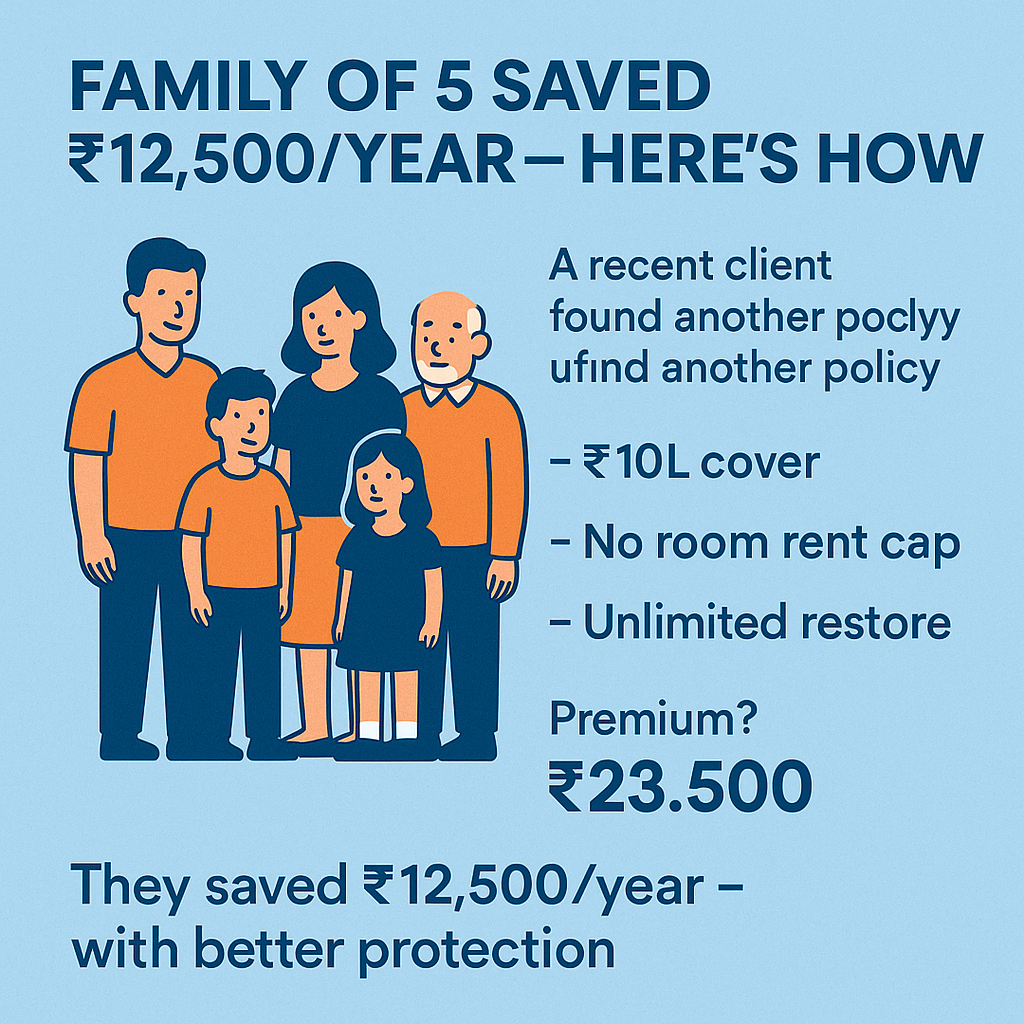
Instead of relying solely on traditional comparisons, the family used AI-powered insurance analysis tools, which helped them identify a policy that:
- Had no room rent cap (ensuring full claim eligibility for all medical expenses)
- Included an unlimited restore benefit (ensuring continuous protection for all family members)
- Offered ₹10 lakh coverage at a lower premium of ₹23,500/year
- Had no hidden disease-specific sub-limits, making sure all treatments were fully covered
How AI Helps Families Select Smarter Policies
- Scans Fine Print for Hidden Clauses
- AI quickly detects room rent caps, waiting periods, disease-specific limits, ensuring users are aware before purchasing.
- Compares Policies Side-by-Side
- AI provides instant comparisons based on cost, benefits, and claim settlement ratios, helping families make data-backed decisions.
- Highlights Claim Settlement Track Record
- AI flags insurers with high rejection rates, ensuring users select reliable providers.
- Identifies Plans With Restore Benefits & Full Coverage
- Ensures policies have continuous protection, avoiding depletion of sum insured.
Final Thoughts: How AI Helped a Family Save ₹12,500 While Enhancing Coverage
By switching to a more transparent policy, the family not only saved ₹12,500 annually but also secured better hospitalization benefits. The new plan ensured:
- Full claim eligibility without room rent capping
- Unlimited restore benefits for long-term security
- No unexpected disease-specific sub-limits
- Lower premium while maintaining ₹10 lakh coverage
Choosing the right health insurance isn’t just about premium costs—it’s about full financial protection. AI-driven comparison tools make it possible to find better coverage at lower costs, ensuring families maximize their health benefits without unnecessary expenses.