April 2025

The Pitfalls of Low-Premium Health Insurance Plans: Hidden Costs That Could Break Your Budget
low-premium-health-insurance

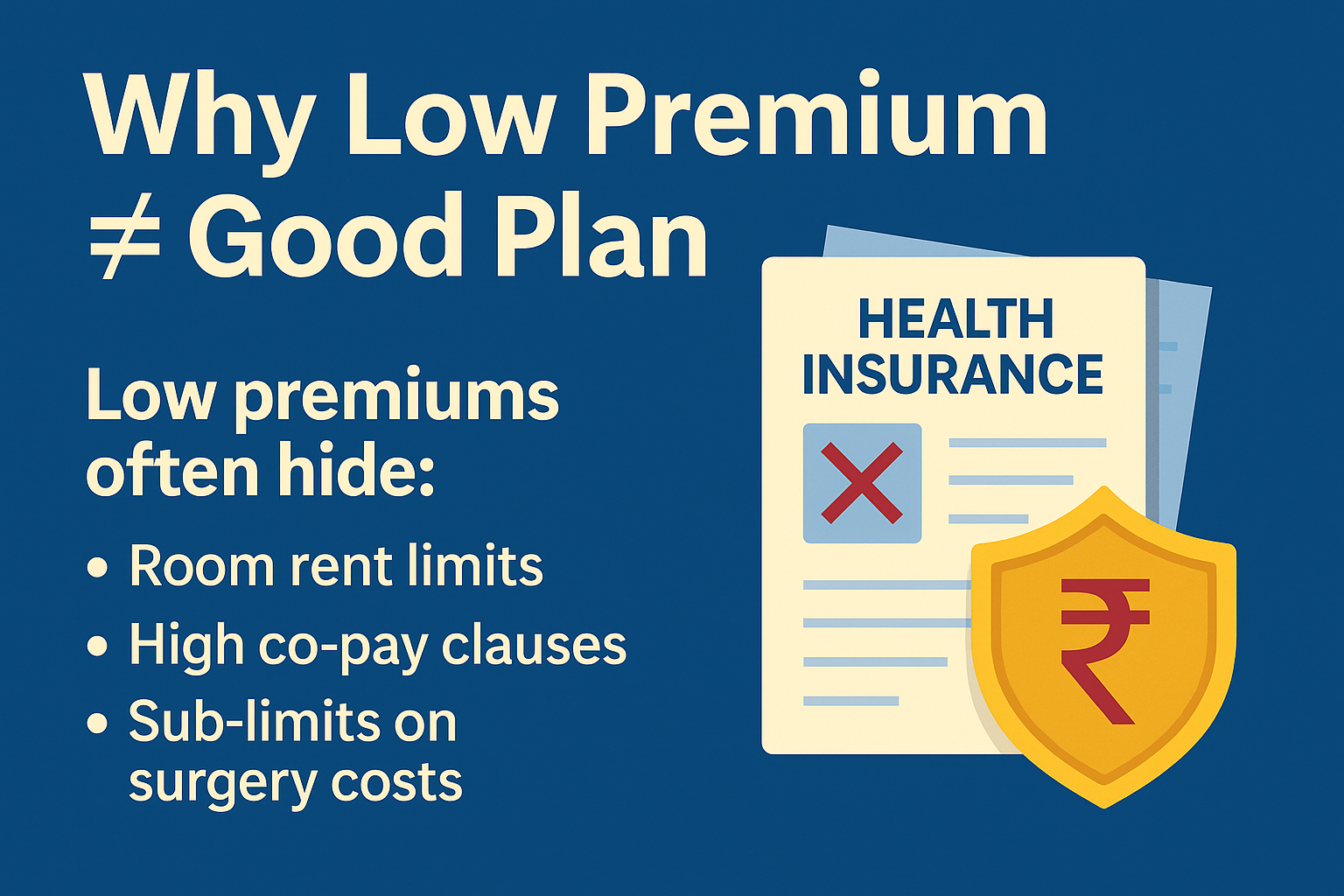
Health insurance is meant to safeguard financial stability in times of medical emergencies. Yet, many policyholders find themselves burdened with unexpected expenses despite having insurance coverage. The culprit? Low-premium health insurance plans that seem affordable on the surface but conceal crucial limitations. While these plans promise to lighten your financial load through seemingly attractive premiums, they often mask the real cost of healthcare—forcing policyholders to pay substantial out-of-pocket expenses when making claims. When Low Premiums Hide Inadequate Coverage At first glance, low-premium health insurance policies appear to be a great deal. After all, who wouldn’t want to pay less while still enjoying health coverage? The issue, however, lies in the fine print. Many insurers design budget-friendly plans with built-in limitations that significantly restrict coverage. Some common constraints include: These hidden pitfalls leave policyholders financially vulnerable—precisely when they were counting on their insurance to provide security. The Real-World Consequences of Low-Premium Plans Let’s examine a case study that highlights the true cost of inadequate coverage. Case Study: A Bitter Experience with Low-Premium Insurance In 2023, Mumbai-based IT professional Ravi opted for a low-cost health insurance plan with a ₹5 lakh cover. Given his good health at the time, he believed he wouldn’t need extensive hospitalization and settled for a policy with a ₹2,500 room rent cap and a 20% co-payment clause. Everything seemed fine—until Ravi was diagnosed with acute appendicitis and required urgent surgery. His hospital stay lasted five days, and the total bill came to ₹3.5 lakh. Here’s how his plan left him with heavy out-of-pocket expenses: Total additional cost Ravi paid: ₹1,05,000—a massive unexpected expense despite holding a ₹5 lakh policy. This case reflects a common story among policyholders who don’t scrutinize coverage limitations before purchasing a plan. Using AI to Assess the True Value of Your Health Policy With advancements in technology, AI-powered tools can now analyze insurance policies to identify hidden gaps and assess true coverage value beyond just premium costs. Here’s how AI can help: 1. Smart Policy Comparisons AI algorithms can compare multiple policies side by side, factoring in room rent limits, co-payment clauses, sub-limits, and exclusions—helping users understand potential financial liabilities. 2. Real-Time Claim Simulation AI-driven simulations allow users to calculate actual out-of-pocket expenses based on medical scenarios. Users can input medical conditions and receive an estimated breakdown of how much their policy would cover and how much they’d need to pay from their own pocket. 3. Custom Recommendations AI-powered systems consider users’ health risks, age, income, and medical history to suggest optimal insurance plans without hidden constraints—helping users make an informed decision. 4. Automated Policy Review Many policyholders fail to reassess their insurance plan over time. AI tools can automatically review existing policies and alert users about potential gaps in coverage as their healthcare needs evolve. By leveraging AI, individuals can bypass misleading marketing tactics and focus on what really matters: comprehensive financial security during medical emergencies. Final Thoughts: Prioritizing Coverage Over Premiums Low-premium health insurance policies may seem appealing at first glance, but hidden limitations can lead to overwhelming financial burdens when making claims. Instead of focusing solely on affordability, policyholders must prioritize comprehensive coverage—even if it means paying a slightly higher premium. By using AI-powered tools to assess policy details, individuals can make informed choices that provide real protection, ensuring that their insurance plan stands strong when they need it the most. When it comes to health insurance, it’s not just about paying less—it’s about securing real financial safety.
The Pitfalls of Low-Premium Health Insurance Plans: Hidden Costs That Could Break Your Budget Read More »

The Importance of Unlimited Restore Benefits in Health Insurance

Unlimited-restore

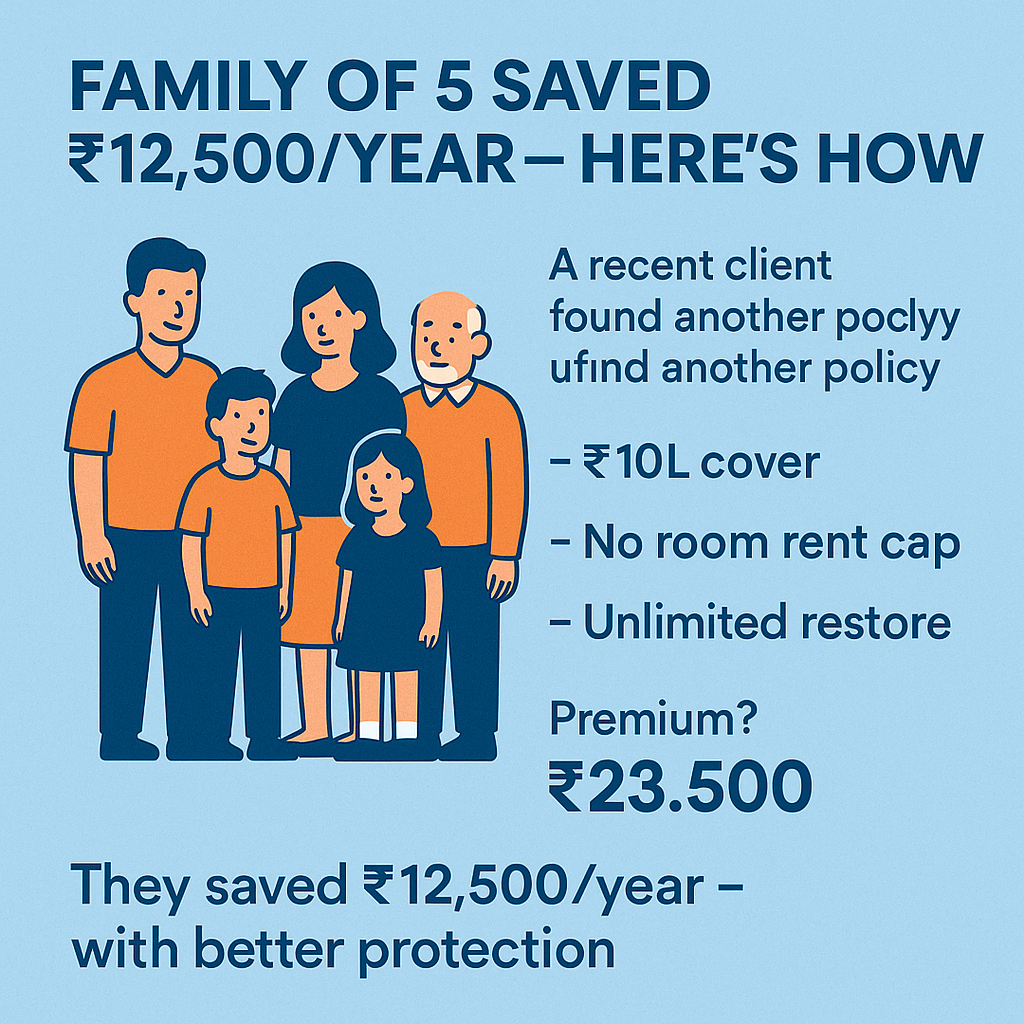
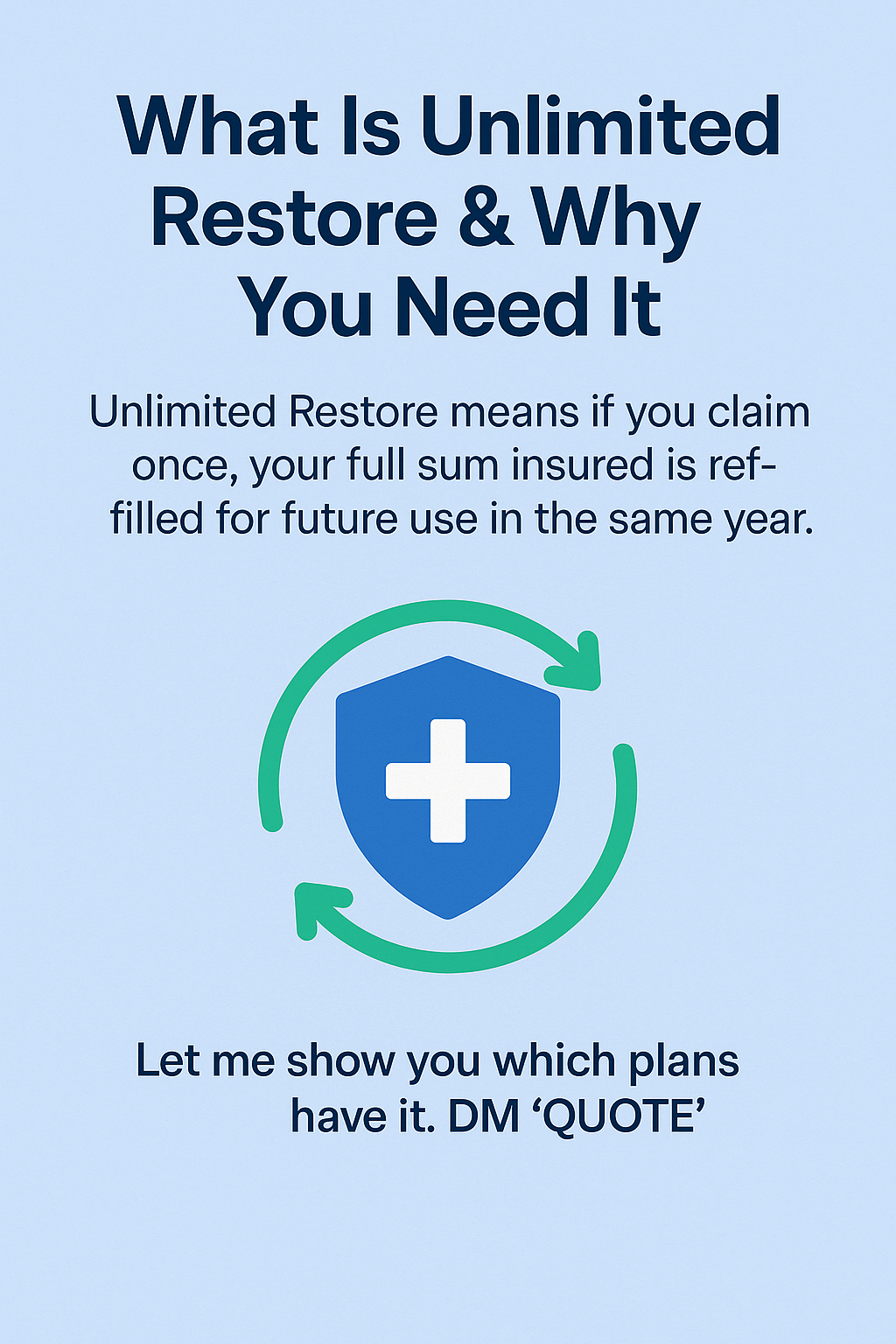
The Limitations of Standard Restore Benefits Many health insurance policies advertise a restore benefit, which seems like a great safeguard for policyholders. This feature is meant to replenish the sum insured once it has been used, allowing policyholders to continue receiving coverage without worrying about exhausting their health insurance. However, there’s a hidden limitation in most plans: These conditions can severely restrict a family’s ability to use their health insurance when multiple claims arise, making standard restore benefits far less useful than expected. Why Standard Restore Benefits Can Fail You Imagine a family of four with a ₹10 lakh health insurance policy. In a single year: At this point, only ₹1 lakh remains in the sum insured. If the son needs hospitalization before the policy renews, there might be no coverage left. Many insurers claim to provide a restore benefit, but due to restrictive clauses: A Real-World Example of Restore Benefit Failure A 45-year-old man in Bangalore had a ₹7 lakh sum insured policy with a standard restore benefit. When he used ₹6 lakh for bypass surgery, he assumed his coverage would be replenished. However: These restrictions can lead to financial stress, forcing families to dip into savings despite having insurance. Choosing a Policy with Unlimited Restore Benefits Unlimited restore benefits solve the biggest limitations of standard policies. With plans like Niva Bupa ReAssure, the sum insured can be replenished multiple times, ensuring continuous coverage without restrictions on illness type or usage limits. How Unlimited Restore Benefits Protect Policyholders Example: AI-Driven Insurance Comparison Uncovers the Right Policy A family of five was considering a policy with ₹10 lakh coverage and standard restore benefits, costing ₹36,000/year. However: Using AI-driven comparison tools, they discovered a policy with unlimited restore benefits, offering: Final Thoughts: Why Unlimited Restore Benefits Are a Must-Have Health insurance should be a financial safety net, ensuring continuous protection throughout the policy year. Standard restore benefits often fail policyholders when they need coverage the most, but unlimited restore features eliminate restrictions, replenish coverage multiple times, and prevent unexpected out-of-pocket expenses. Before choosing a health insurance plan, ensure it has unlimited restore benefits—because medical emergencies don’t come with a limit.

The Importance of Unlimited Restore Benefits in Health Insurance Read More »

Evaluating Health Insurance Advisors: How AI Helps You Make Smarter Choices

insurance-agent-recommendation

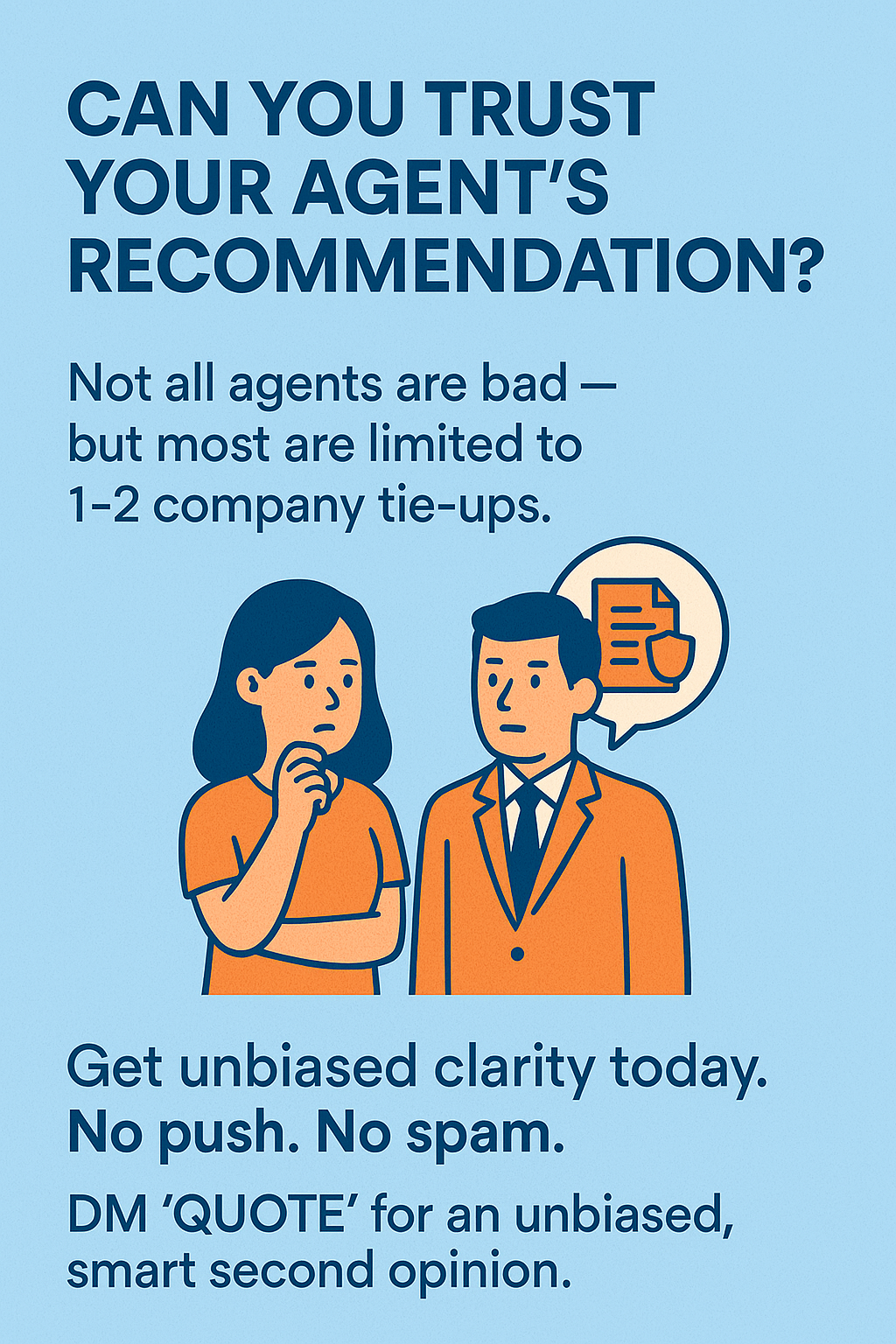
The Limitations of Traditional Insurance Agents Choosing the right health insurance policy is a critical decision—one that affects both financial stability and access to quality healthcare. Most people rely on insurance agents to guide them through this process, assuming that their recommendations will be the most beneficial. However, insurance agents don’t always provide a complete picture. They typically: This means that while an agent might suggest a policy that appears ideal, it may not align with your specific medical needs, financial situation, or future healthcare requirements. The Risk of Relying Solely on Agents 1. Limited Exposure to Policies Most insurance agents work with a handful of companies—often just a few insurers whose plans they actively promote. They are typically contracted to sell specific policies, meaning they won’t present options from insurers they don’t work with. As a result: 2. Potential Bias Towards Higher Commissions Insurance agents earn commissions based on the policies they sell. While some genuinely aim to provide the best advice, many focus on policies that offer them the highest payouts. For example: A Family Misguided by an Agent’s Advice A family of four in Mumbai wanted comprehensive health insurance. Their agent recommended a ₹35,000 per year plan with ₹10 lakh coverage. However, upon closer inspection: Using AI-driven comparison tools, the family found a better policy for ₹24,500 per year, which offered: Their new policy saved them ₹10,500 annually while offering stronger benefits, proving that an agent’s suggestion wasn’t necessarily the best fit. AI-Driven Platforms for Smarter, Unbiased Comparisons 1. AI Offers Complete Market Analysis Unlike agents who work with limited insurers, AI-driven insurance comparison platforms scan policies across the entire market. They analyze: 2. Objective & Transparent Recommendations AI tools provide data-driven insights, ensuring unbiased policy comparisons. Instead of prioritizing policies based on commissions, AI: 3. Instant Policy Customization With AI tools, users can input: AI then matches the best-fitting policy, ensuring a customized approach rather than a one-size-fits-all recommendation. 4. Identifying Real-World Claim Experiences AI platforms pull historical claim settlement data from insurers. This helps users evaluate: 5. Eliminating Hidden Clauses & Unexpected Costs AI scans policy documents to uncover: Users receive clear breakdowns, helping them avoid policies that may lead to excessive out-of-pocket costs. Example: AI in Action A 42-year-old individual searched for a ₹7 lakh coverage policy. An agent suggested a ₹28,000 per year plan but failed to mention: Using AI, they discovered an alternative policy for ₹19,500 per year, which had: Thanks to AI-based comparisons, they saved ₹8,500 annually while securing stronger policy terms. Final Thoughts: Make Data-Driven Decisions, Not Commission-Driven Ones Insurance agents serve an important role, but relying solely on their advice may result in suboptimal policy choices. AI-driven platforms eliminate bias, misinformation, and limited exposure, ensuring users select policies based on real financial protection—not sales incentives. With AI-driven comparisons, policyholders can: Health insurance should provide full peace of mind, not surprises at claim settlement. AI ensures smart, informed decisions that maximize coverage while minimizing unnecessary expenses.

Evaluating Health Insurance Advisors: How AI Helps You Make Smarter Choices Read More »

How AI Helped a Family Save ₹12,500 on Health Insurance Without Compromising Coverage

save-with-better-protection

The Misconception That Higher Premiums Mean Better Coverage Many families assume that paying more for health insurance guarantees better protection. While higher premiums often suggest extensive coverage, the truth is not all expensive policies offer the best benefits. Take, for example, a family of five considering a ₹36,000 annual health insurance plan. On the surface, it seemed like a great deal with a ₹10 lakh sum insured, but upon closer inspection, critical gaps were identified: Despite the high premium, the policy had limitations that could lead to substantial out-of-pocket expenses during hospitalization. The Hidden Costs of Suboptimal Insurance Plans Many policyholders don’t realize that fine print clauses can diminish actual claim reimbursements. Let’s break down the specific risks this family would have faced: 1. Room Rent Capping – A Hidden Drain on Finances This policy had a ₹5,000 daily cap on room rent. If a policyholder selected a ₹7,000 per day hospital room, all associated costs—doctor fees, ICU charges, surgery expenses—would be proportionately reduced. This could result in tens of thousands in unexpected expenses. Example of Proportional Deduction Impact Expense Type Actual Cost Insurer’s Revised Coverage (Based on Room Rent Cap) Amount Paid from Pocket Room Rent ₹7,000/day ₹5,000/day ₹2,000/day Surgeon Fees ₹1,00,000 ₹71,400 ₹28,600 ICU Charges ₹25,000 ₹17,850 ₹7,150 Anesthesia ₹10,000 ₹7,140 ₹2,860 Total Out-of-Pocket ₹58,000 — ₹58,000 Even though the family’s policy offered ₹10 lakh coverage, hospitalization could still leave them paying out of pocket due to room rent capping. 2. No Restore Benefit – A Major Risk in Family Policies Family floater plans share the sum insured across all members, but without a restore benefit, one serious illness can deplete the coverage, leaving the rest of the family vulnerable. For example: 3. Disease-Specific Sub-Limits – A Trap for High Treatment Costs Some policies limit reimbursements for expensive procedures. In the family’s original plan: Without understanding these limits, the family could have faced significant financial strain during serious illnesses. Finding a Better Plan Using AI-Driven Insurance Comparison Instead of relying solely on traditional comparisons, the family used AI-powered insurance analysis tools, which helped them identify a policy that: How AI Helps Families Select Smarter Policies Final Thoughts: How AI Helped a Family Save ₹12,500 While Enhancing Coverage By switching to a more transparent policy, the family not only saved ₹12,500 annually but also secured better hospitalization benefits. The new plan ensured: Choosing the right health insurance isn’t just about premium costs—it’s about full financial protection. AI-driven comparison tools make it possible to find better coverage at lower costs, ensuring families maximize their health benefits without unnecessary expenses.

How AI Helped a Family Save ₹12,500 on Health Insurance Without Compromising Coverage Read More »

Hidden Clauses That Can Drain Your Health Coverage: What You Need to Know Before It’s Too Late

health-insurance-worries

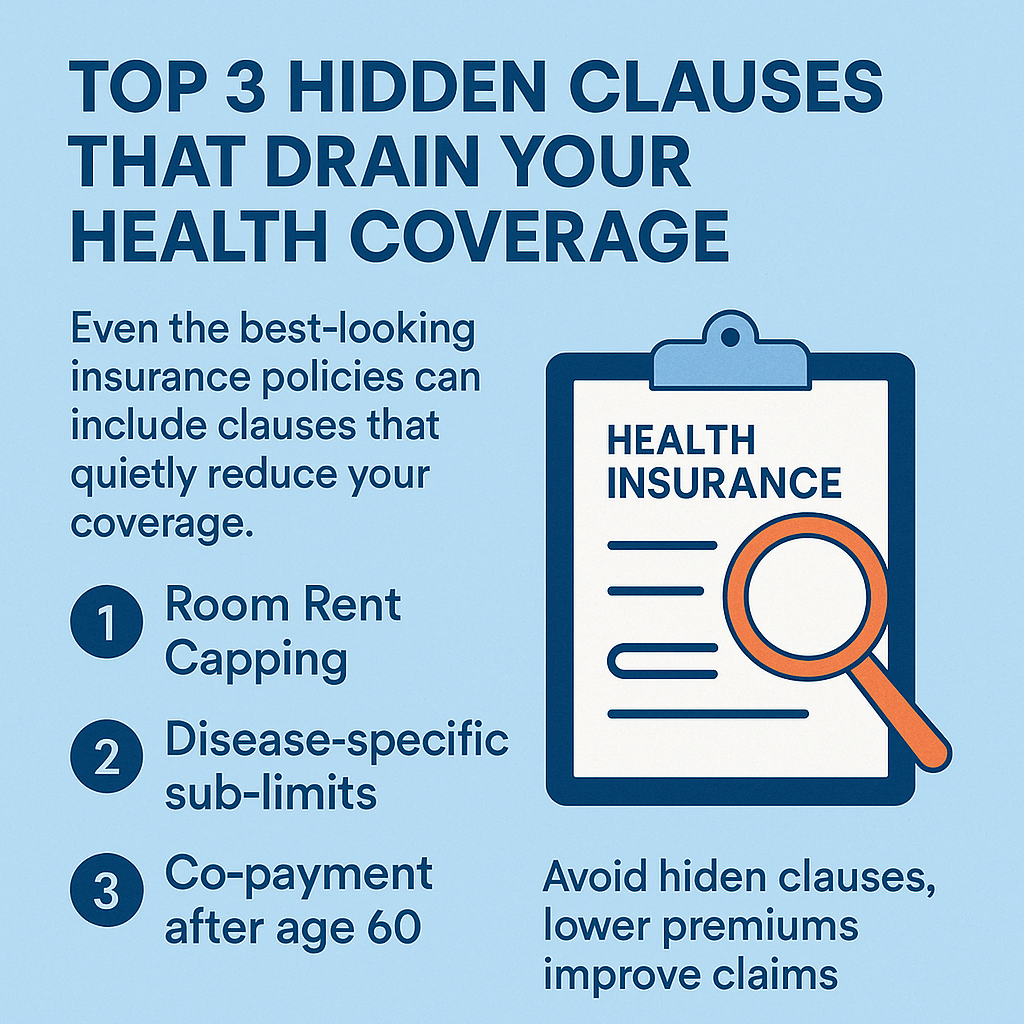
Health Insurance Coverage Isn’t Always What It Seems Many people believe that buying a high-value health insurance policy guarantees full financial protection. A ₹10 lakh or ₹20 lakh cover sounds reassuring, but what many policyholders don’t realize is that hidden clauses buried in fine print can drastically reduce claim amounts when a medical emergency strikes. Insurance policies are structured with technical terms, exclusions, sub-limits, and clauses that aren’t always made clear during the purchasing process. This can result in unexpected out-of-pocket expenses, turning what should have been a safety net into a frustrating financial burden. A policyholder might assume that their policy covers hospitalization in full, but when they file a claim, they discover: These limitations aren’t immediately obvious until a claim is denied or significantly reduced, leaving patients and families scrambling for money despite having insurance. The Hidden Clauses That Drain Your Benefits Many policyholders only realize these restrictions when it’s too late—after hospitalization, during claim settlement. Let’s break down some of the most common hidden clauses that can result in heavy out-of-pocket expenses. 1. Room Rent Capping One of the biggest surprises in health insurance policies is room rent limit restrictions. Here’s how they work: Case Study: A Costly Miscalculation A 38-year-old patient in Delhi had a ₹10 lakh health insurance policy, assuming it would cover all hospitalization costs. However, his policy had a ₹5,000 per day room rent cap, but he stayed in a ₹7,000 per day room. Here’s what happened: Despite having a ₹10 lakh policy, the patient paid ₹58,000 from his savings—all because of room rent capping. 2. Disease-Specific Sub-Limits Some policies impose restrictions on certain illnesses or treatments, regardless of the total sum insured. Examples include: These sub-limits drastically reduce reimbursements, forcing patients to cover significant costs from their own pockets. 3. Co-Payment Clauses for Senior Citizens Many policies for senior citizens include co-payment clauses, requiring policyholders to pay 10-50% of medical expenses themselves. For example: This clause can go unnoticed until hospitalization occurs, leaving older patients with unexpected financial stress. How AI-Driven Tools Help Identify Hidden Clauses The best way to avoid these costly surprises is to identify restrictive clauses before purchasing a policy. AI-powered insurance comparison tools analyze policy documents, highlight exclusions, and flag problematic clauses upfront, making the selection process easier and more transparent. How AI Helps in Choosing the Right Health Insurance Example: AI in Action A 45-year-old policyholder wanted to buy a ₹10 lakh policy. They used an AI-driven insurance comparison tool, which revealed: Though Policy A looked cheaper, it had several hidden limitations. The AI analysis helped the policyholder choose Policy B, ensuring maximum financial protection. Final Thoughts: Make Informed Choices & Avoid Unpleasant Surprises Health insurance is meant to reduce financial stress during medical emergencies, but hidden clauses can drain your coverage unexpectedly. Choosing the right policy requires careful analysis to identify room rent caps, disease-specific sub-limits, and co-payment clauses before purchasing. The best way to avoid these pitfalls is to leverage AI-powered tools that analyze policies and flag restrictions upfront. With AI-driven insights, policyholders can make data-backed decisions, ensuring they get the coverage they need without hidden surprises.

Hidden Clauses That Can Drain Your Health Coverage: What You Need to Know Before It’s Too Late Read More »

How AI is Transforming Health Insurance Comparison: Making Smarter Choices Without the Guesswork

buy-health-insurance

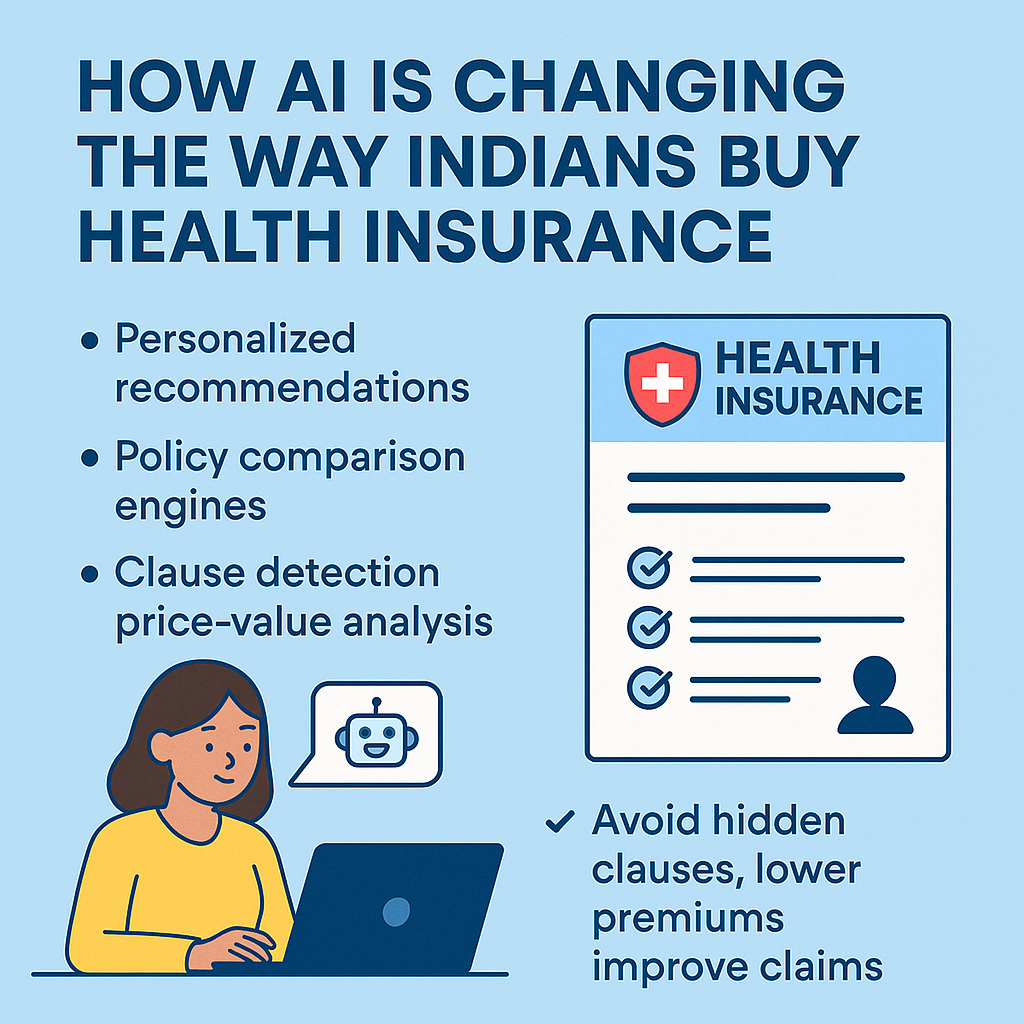
The Overwhelming Task of Choosing the Right Health Insurance Selecting the right health insurance policy is one of the most important financial decisions people make. But it’s also one of the most complex. With dozens of insurers, hundreds of plans, and countless technical clauses, it’s easy to get lost in policy jargon. People often struggle with: This lack of clarity can lead to costly mistakes, such as choosing a plan that looks good on paper but falls short when it comes to actual coverage. Many policyholders only realize the limitations of their insurance when a claim is denied or significantly reduced. The Flaws of Traditional Insurance Selection For decades, policy selection relied heavily on insurance agents, comparison tables, and manual research. While these methods served their purpose, they had serious drawbacks: Case Example: The Cost of Ignoring Fine Print Consider this real-life scenario: Despite having a ₹10 lakh coverage, he paid ₹55,000 from his pocket due to proportional deductions. AI-Powered Policy Selection for Smarter Decisions This is where Artificial Intelligence (AI) is making a significant difference. AI-powered tools analyze policies in depth, identify hidden clauses, and compare multiple options effectively, ensuring transparency and accuracy. How AI Improves Health Insurance Selection Example: AI in Action Imagine two policies: At first glance, both policies look similar—but AI highlights critical differences. By making these comparisons instant and transparent, AI helps users pick the plan that truly fits their needs. Final Thoughts: Why AI-Based Insurance Comparison is the Future AI is eliminating guesswork, confusion, and hidden surprises in health insurance selection. It allows policyholders to: Health insurance is meant to protect your finances, and AI ensures you get the right coverage without nasty surprises.

How AI is Transforming Health Insurance Comparison: Making Smarter Choices Without the Guesswork Read More »

Room Rent Limit: The Hidden Clause That Could Cost You ₹50,000+

room-rent-limit

The Misconception of a ₹10 Lakh Cover Most people believe that a ₹10 lakh health insurance cover is a safeguard against all hospital expenses. They assume that this hefty sum will comfortably cover doctor fees, surgery costs, diagnostic tests, and hospital room charges. However, buried deep in the policy terms is an overlooked clause—the room rent limit—which can significantly impact how much of the claim is actually paid by the insurer. Many policyholders don’t realize that insurers set a cap on the daily room rent they will reimburse. If a patient opts for a room exceeding the permitted limit, they don’t just pay the difference in rent out of pocket. Instead, all associated costs—surgeon fees, consultation charges, procedure costs—get proportionately reduced based on the excess room rent. This results in an unexpectedly high out-of-pocket expense that can drain personal savings. How Room Rent Limit Can Affect Your Entire Bill Let’s consider a common scenario. Imagine you’re admitted to a private hospital in Delhi with a policy that covers ₹10 lakh but has a room rent cap of ₹5,000 per day. You choose a room costing ₹7,000 per day, thinking you will only need to pay ₹2,000 extra for the room itself. However, the insurance company proportionately reduces all other expenses—doctor fees, surgery charges, ICU costs, anesthesia—based on the difference in room rent. Here’s how the numbers could play out: Expense Type Actual Hospital Charge Insurer’s Revised Coverage (based on room rent limit) Amount You Pay from Pocket Room Rent ₹7,000/day ₹5,000/day ₹2,000/day Surgeon Fees ₹1,00,000 ₹71,400 ₹28,600 Diagnostic Tests ₹15,000 ₹10,710 ₹4,290 ICU Charges ₹25,000 ₹17,850 ₹7,150 Anesthesia ₹10,000 ₹7,140 ₹2,860 Total Extra Payment — — ₹58,000 In this case, even though the policyholder had a ₹10 lakh coverage, they had to pay ₹58,000 out of pocket—all due to room rent capping. This hidden clause can lead to unexpected financial strain, forcing families to scramble for funds at the last minute. Choosing Plans Without Room Rent Limits The best way to protect yourself from unnecessary medical costs is to choose a health insurance plan without room rent capping. Several modern policies offer the flexibility to select any hospital room without restrictions, ensuring that the claim settlement covers all associated medical expenses fairly. For instance, Niva Bupa ReAssure 2.0 is designed to provide full freedom on room type selection. It allows policyholders to pick any hospital room without triggering proportional deductions on other medical charges. Key Steps to Avoid Room Rent Pitfalls Final Thoughts Room rent capping is an often ignored clause that can turn a well-insured hospitalization into a financial nightmare. People assume that a ₹10 lakh health cover is sufficient, but failing to check this small detail can result in unexpected out-of-pocket payments. Before finalizing any health insurance, always confirm that your plan has NO room rent restrictions. By staying informed and choosing the right plan, you can maximize the benefits of your coverage and avoid unnecessary financial stress. Avoid financial shocks. Let AI help you review your plan today. Let me help you spot it before it costs you. DM me ‘QUOTE’ for a free AI-powered review. What are other common pitfalls in health insurance? Health insurance can be tricky, and many people unknowingly fall into common pitfalls that can lead to financial stress. Here are some key mistakes to watch out for: The importance of reading policy documents? Reading policy documents is crucial because it helps you understand what your health insurance truly covers—and just as importantly, what it doesn’t cover. Here’s why it’s essential: 1. Knowing Your Coverage Limits Many people assume that a high sum insured means total protection, but there are sub-limits on different expenses, like room rent capping, ICU charges, and specific medical treatments. If you don’t check these details, you could face unexpected out-of-pocket costs. 2. Avoiding Claim Rejections Insurance companies have strict guidelines on pre-existing conditions, waiting periods, and exclusions. If you don’t fully understand these clauses, your claim could get denied—even in an emergency. 3. Understanding Co-Payment & Deductibles Some policies require co-payment, meaning you’ll need to pay a percentage of the bill yourself. Others have deductibles, which means the insurer only starts paying once you’ve covered a certain amount. If you’re unaware of these conditions, you might be caught off guard during hospitalization. 4. Checking Network Hospitals Health insurance often offers cashless hospitalization only in their network hospitals. If you assume any hospital will be covered, you could end up paying upfront and struggling with a reimbursement process. 5. Recognizing Exclusions & Waiting Periods Certain treatments, like maternity benefits, bariatric surgery, or joint replacements, may have waiting periods or even complete exclusions. Reading the document ensures you know when you’re actually eligible for coverage. 6. Identifying Hidden Charges & Limits on Medical Expenses Policies may impose caps on doctor consultation fees, diagnostics, and ambulance costs. If these limits are too low, you might need to pay more than expected. 7. Understanding Renewal Terms Some plans change premiums based on age brackets, while others offer lifetime renewability. If you don’t read the renewal terms, you could find yourself with expensive hikes in premiums or restrictions on renewing as you grow older.

Room Rent Limit: The Hidden Clause That Could Cost You ₹50,000+ Read More »